

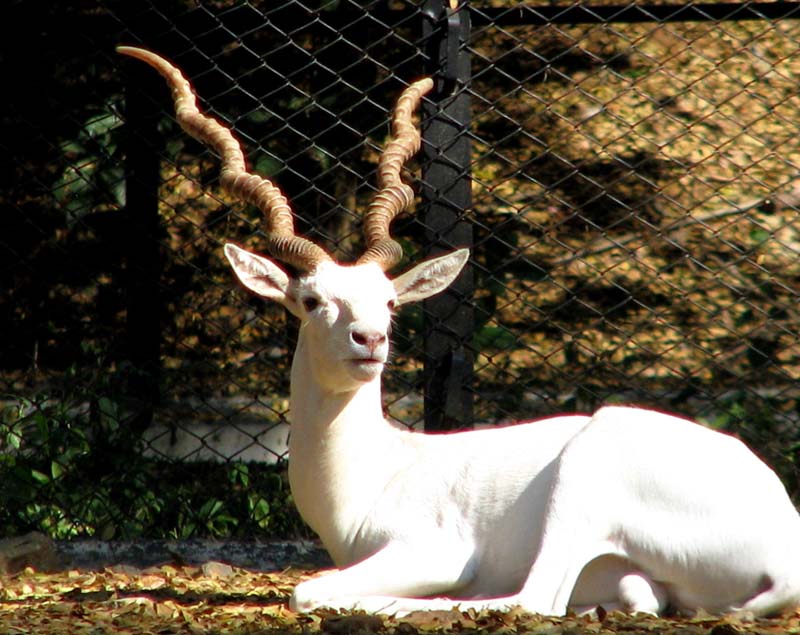
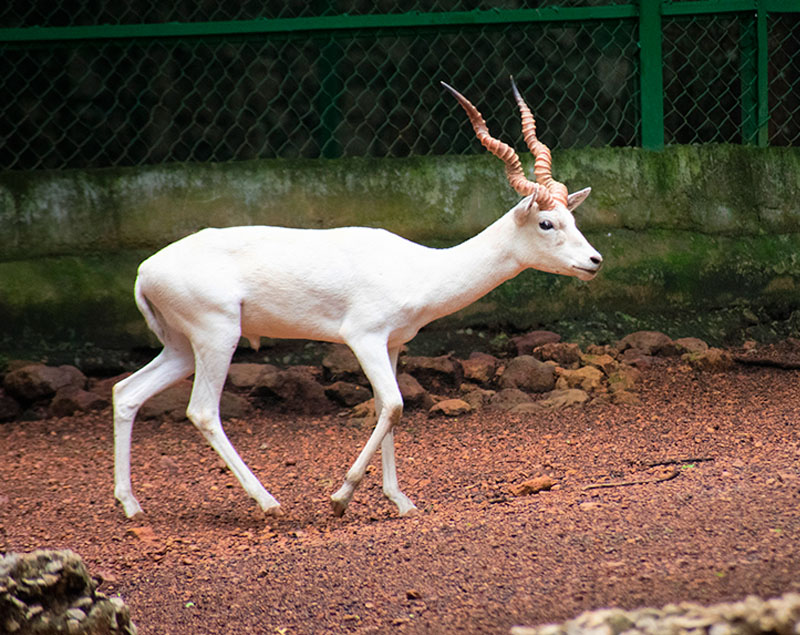
Albinism in Blackbuck is rare and caused by the lack of the pigment melanin. The animal looks fully white due to the lack of melanin in their skin. Wildlife experts say that the biggest problem with these Albinos is that they are singled out by predators and hunted. The distinctive horns of the Blackbuck are ringed with 1 to 4 spiral turns, rarely more than 4 turns, and can be as long as 79 cm (31 in).In the male, the upper body is black (dark brown), and the belly and eye rings are white. The light-brown female is usually hornless.
According to the IUCN Red List, the total population of the blackbuck is around 50,000 individuals.lackbuck once lived on open plains over the whole Indian subcontinent, but their numbers and range have been drastically reduced as the human population has grown.
They are the “state animal” of Rajasthan. They are considered sacred by the Bishnoi community of Rajasthan.

A. cervicapra

Bovidae)

10-12 years, rarely up to 18

The blackbuck is active mainly during the day. It forms three types of small groups: female, male, and young bachelor herds. Males often adopt lekking as a strategy to garner females for mating. While other males are not allowed into these territories, females often visit these places to forage.

Bovidae)

20-57

They like open habitats such as grassy plains and thinly forested areas, which allow them to spot predators from long distances as well as providing grazing forage.

They are grazers of grasses. They love feeding on sedges, fall witch grass, mesquite, live oak etc., They also love the leaves of acacia tree. In summer, blackbucks have low protein intake and their overall consumption of food is low.